Architecture
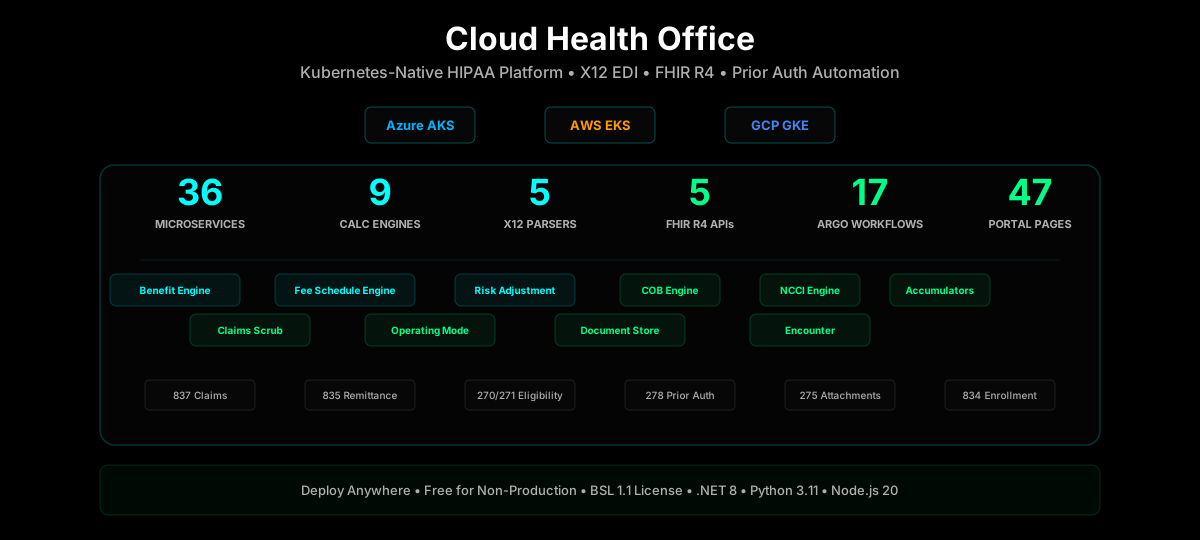
Cloud Health Office is a cloud-native multi-tenant SaaS platform that processes healthcare EDI transactions for unlimited health plans. Configuration-driven, backend-agnostic, and deployable to any Kubernetes cluster.
Overview
The platform runs on Kubernetes (AKS, EKS, or GKE) with Argo Workflows for orchestration. Payer-specific logic is configuration-first, with tenant-aware deployment and integration steps sized to the customer's security review, core admin integration, and operating model.
Key Design Objectives
| Principle | Implementation |
|---|---|
| Multi-Tenant SaaS | Single codebase serves unlimited payers with per-tenant isolation via X-Tenant-ID header routing |
| Configuration-First Onboarding | Add new payers through tenant-aware configuration and implementation-specific validation |
| Backend Agnostic | Works with any claims admin system (QNXT, Facets, HealthEdge, Epic, custom) via ICoreAdminAdapter pattern |
| Cloud Agnostic | Deploy to Azure, AWS, GCP, or on-premises with Kubernetes and Helm charts |
| Standards-Based | X12 EDI (270/275/277/278/834/835/837), FHIR R4, Da Vinci IGs, HL7, USCDI |
Platform Components
Microservices (36)
Member, Coverage, Claims, Eligibility, Authorization, Provider, Benefit Plan, Reference Data, Sponsor, Claims Scrubbing, Capitation, Payment, Pricing API, Terminology Service, Provider Verification, and more. Each service owns its domain data and communicates via Azure Service Bus messaging. The Terminology Service provides FHIR ConceptMap/$translate for SNOMED CT ↔ CPT/ICD-10-CM crosswalk — required for Da Vinci CRD, DTR, and PAS workflows. The Provider Verification Service aggregates NPPES, OIG/LEIE, PECOS, CMS Open Payments, and FSMB data into a composite integrity score per NPI.
Calculation Engines (9)
Benefit Engine (HDHP/HSA, aggregate family accumulators, DRG inpatient), Fee Schedule Engine (DRG lookup, Medicaid cross-schedule, multiple procedure ranking), NCCI Engine, COB Engine, Risk Adjustment Engine, Encounter Engine, Claims Scrub Engine, Capitation Engine, and Operating Mode Engine.
X12 Parsers (5) + Encoder
Five inbound parsers — 837 Claims, 835 Remittance, 834 Enrollment, 276/277 Claim Status, and 278 Prior Auth — plus a shared X12 Encoder for outbound generation. All written in C# (.NET 8) with zero external dependencies.
Claims Adjudication Pipeline
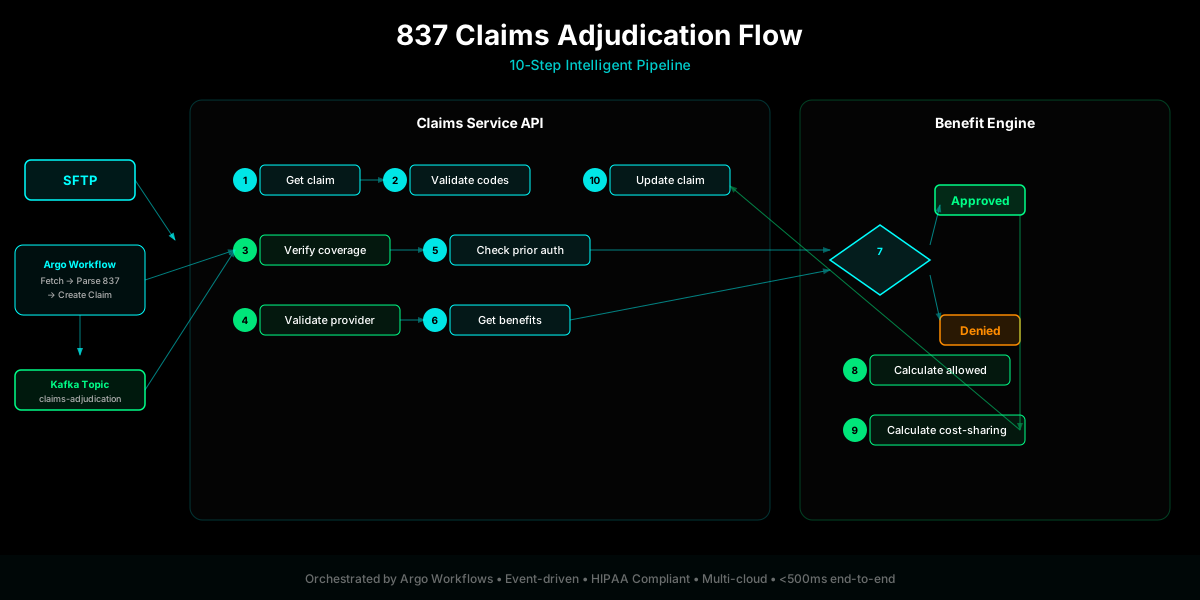
The 10-step claims adjudication pipeline processes an 837 from SFTP ingestion through Argo Workflows to real-time adjudication with full benefit calculation, completing in under 500ms end-to-end.
Pipeline Steps
The pipeline executes: get claim, validate codes, verify coverage, validate provider, check prior auth, get benefits, apply NCCI/MUE edits, calculate allowed amount, calculate cost-sharing (copay/coinsurance/deductible), and update claim status. Each step is individually testable and observable.
Multi-Tenant Design
Every API request carries an X-Tenant-ID header that determines data isolation, configuration routing, and audit logging. The configuration-driven approach means no code changes are required to onboard new payers — only a JSON configuration file defining clearinghouse mappings, benefit rules, and EDI trading partner details.
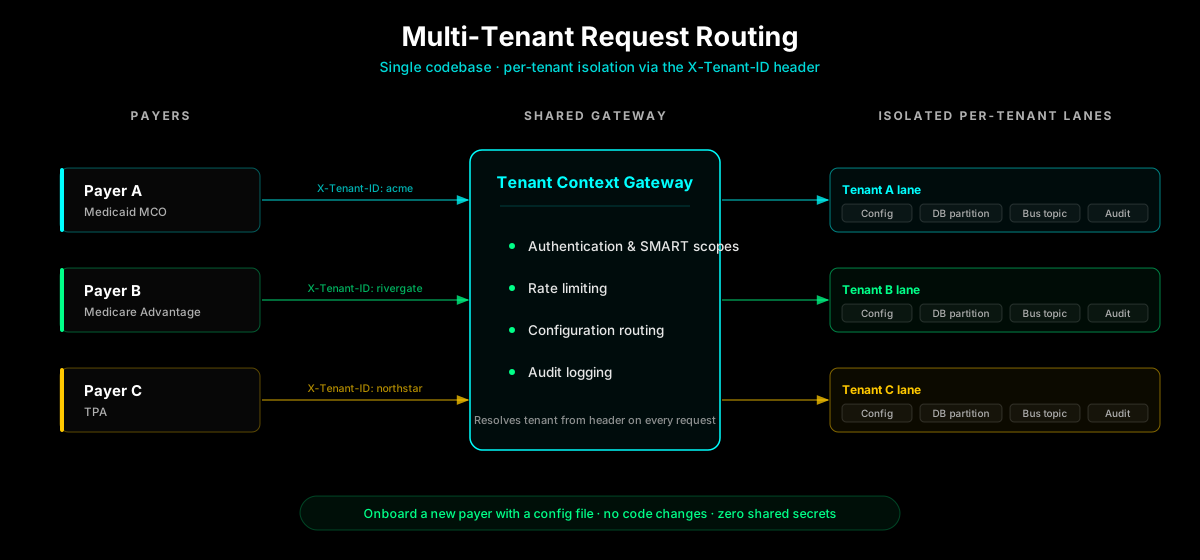
X-Tenant-ID headerThe Config-to-Workflow Generator takes a payer's configuration file and generates complete Argo Workflow YAML and Bicep infrastructure definitions, enabling automated environment provisioning.
Infrastructure
| Component | Technology | Purpose |
|---|---|---|
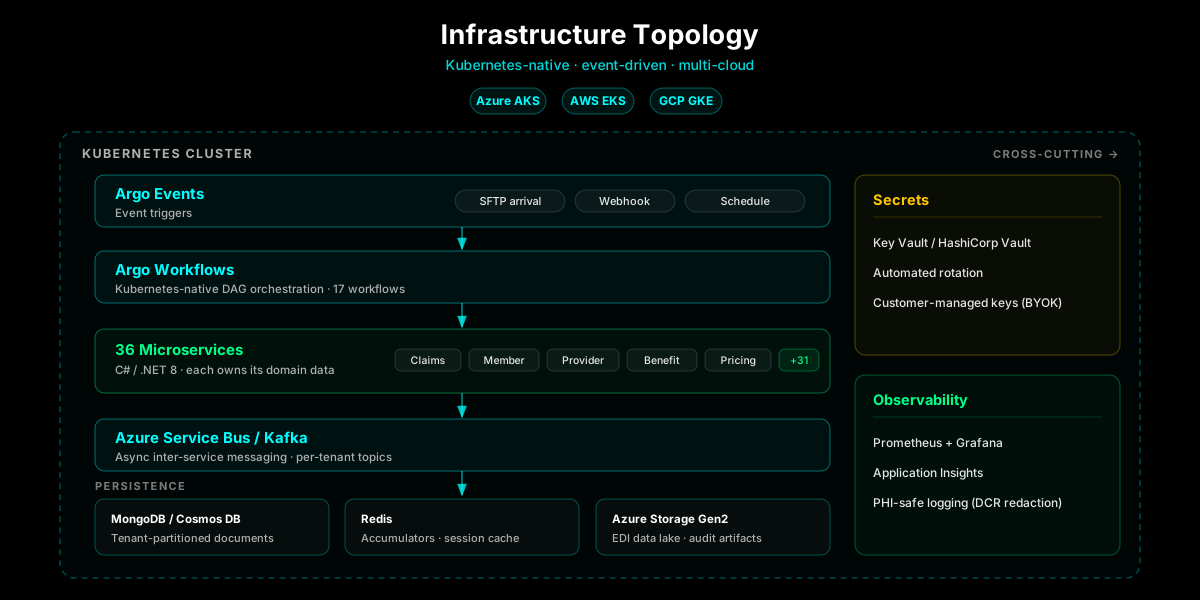
| Orchestration | Argo Workflows | Kubernetes-native DAG workflow execution |
| Event Triggers | Argo Events | SFTP, webhook, and schedule-based triggers |
| Messaging | Azure Service Bus / Kafka | Async inter-service communication |
| Storage | Azure Storage Gen2 | EDI file data lake with security controls for HIPAA validation |
| Secrets | Key Vault / HashiCorp Vault | Secrets management, automated rotation |
| Monitoring | Prometheus + Grafana, App Insights | Metrics, dashboards, PHI-safe logging |
| Database | MongoDB / Cosmos DB | Document store with tenant partitioning |
| Cache | Redis | Accumulator service, session cache |
HIPAA Security
The platform addresses HIPAA technical safeguards through five layers of defense in depth for PHI:
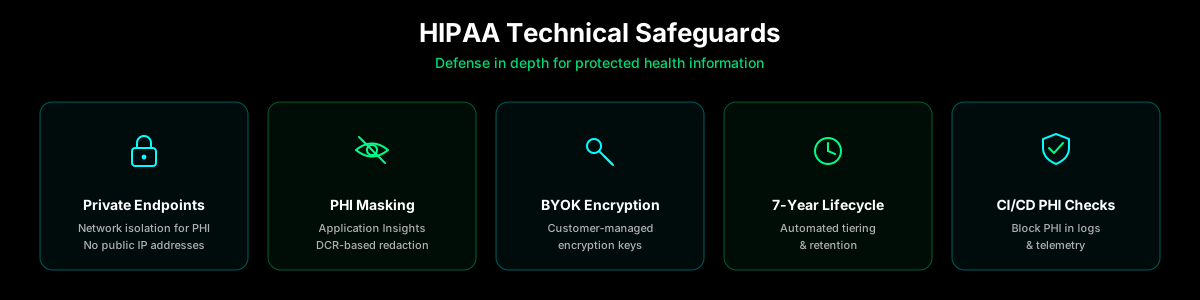
- Private endpoints — network isolation of PHI with no public IP addresses exposed.
- PHI masking — Application Insights redaction using DCR-based rules.
- BYOK encryption — customer-managed encryption keys.
- 7-year data lifecycle — automated tiering and retention.
- CI/CD PHI checks — automated gates designed to keep PHI out of logs and telemetry.
For the current platform architecture overview, claims adjudication architecture, benchmark evidence model, tenant routing, deployment modes, and related deep-dive links, see the ARCHITECTURE.md on GitHub.